Skip to content


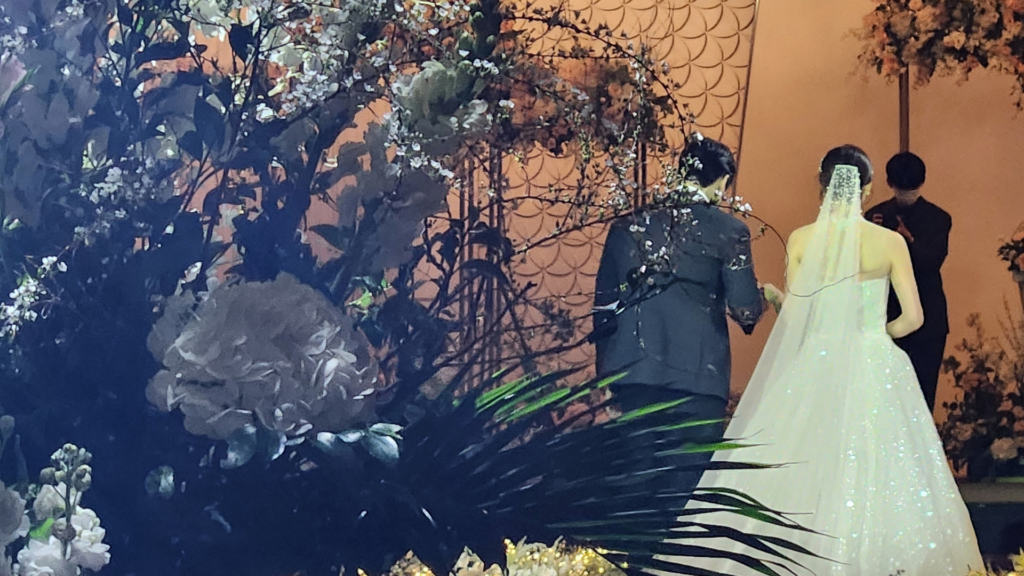
Korean weddings combine modern systems with traditional customs. They are structured, time-efficient, and held in dedicated wedding halls. Compared to Western ceremonies, Korean weddings are shorter and more standardized, especially in urban areas.
Understanding how Korean weddings work helps set clear expectations, whether you are attending one or researching Korean culture.
1. Wedding hall system in Korea
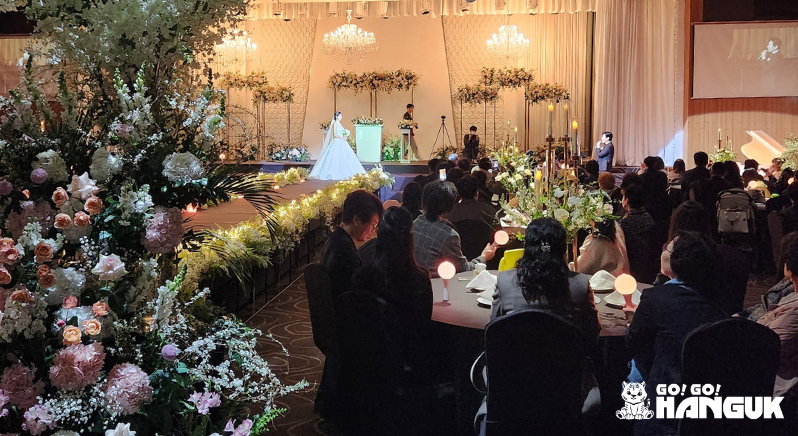
Most Korean weddings take place in commercial wedding halls. These venues host multiple ceremonies per day, each scheduled in fixed time slots. As a result, they follow a strict timeline. A typical venue includes a ceremony hall, a buffet dining area, and a photo display section.
This system allows Korean weddings to run efficiently while accommodating many guests.
Check out wedding hall vibes here.
2. Ceremony duration and structure
The ceremony in Korean weddings usually lasts up to 1 hour. It includes a formal entrance, vows, sometimes short speeches or performances, and photo-taking.
Due to scheduling, weddings are conducted quickly with minimal delays. Guests are expected to follow the flow and move to the reception area after the ceremony.
3. Cash gift culture
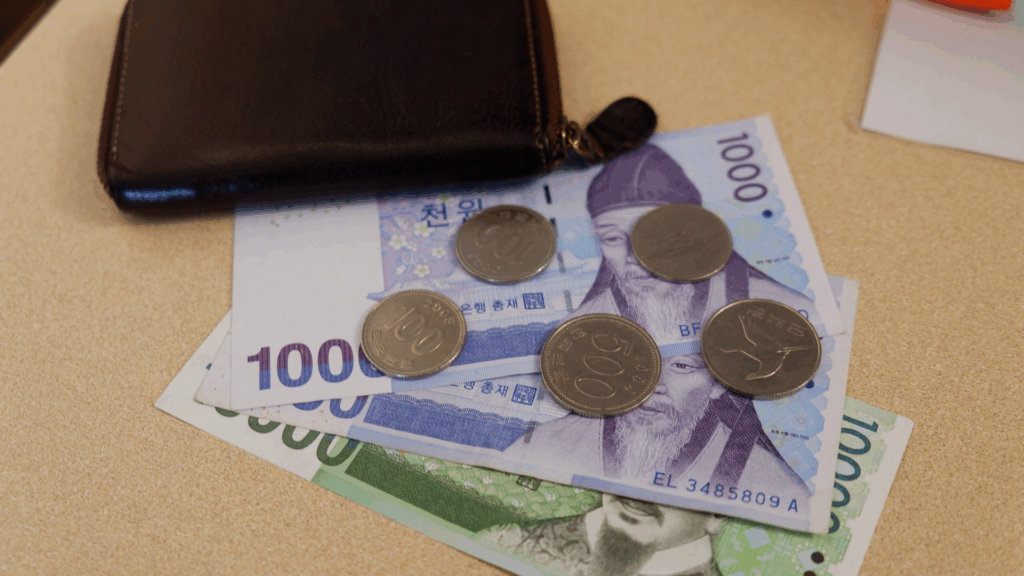
Cash gifts are a central part of Korean weddings and replace traditional boxed presents. Guests prepare an envelope with money, known as chuk-ui-geum (축의금), before arriving.
At the venue, there is usually a reception desk where the envelope is submitted and the guest’s name is recorded. It is considered polite to use a clean envelope and write your name clearly, as this allows the couple to acknowledge your contribution later.
Giving an appropriate amount based on your relationship to the couple is an important part of wedding etiquette.
4. Traditional ceremonies
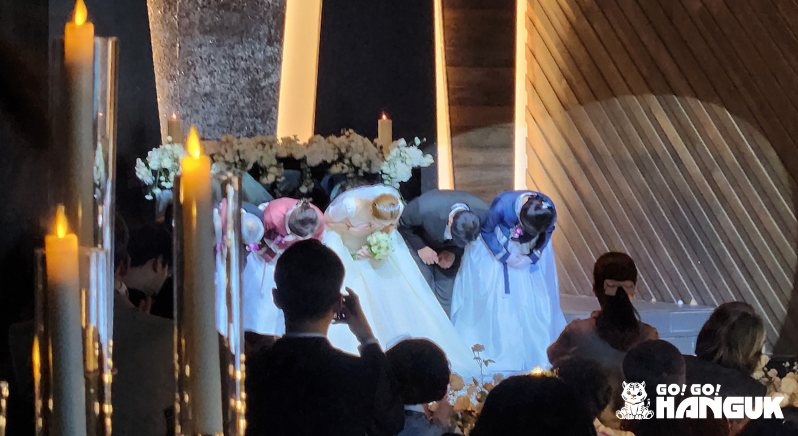
Some Korean weddings include traditional ceremonies such as the pyebaek (폐백), which is typically held after the main ceremony and involves close family members. During this ritual, the couple wears colorful royal hanbok and performs formal bows to parents, who then throw dates and chestnuts as symbolic gestures.
These actions represent respect, fertility, and strong family values.
5. Guest dress code
The dress code for Korean weddings is formal and conservative. Guests are expected to choose outfits that are neat and understated. Wearing white is generally avoided, as it is reserved for the bride. Darker or neutral colors are commonly worn, and overly flashy clothing is discouraged to maintain a respectful atmosphere.
Following these norms ensures appropriateness when you attend a Korean wedding.
6. Reception and dining
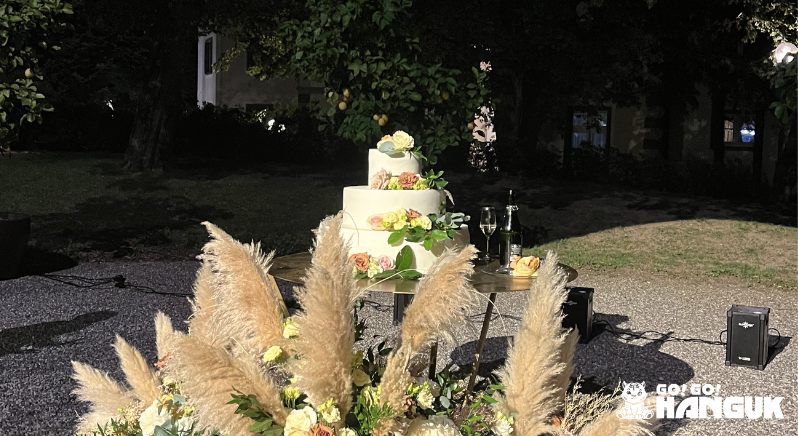
After the ceremony, guests move to a buffet-style dining area, which is standard in Korean weddings. It is acceptable to begin eating without waiting for the couple, as the reception is designed to accommodate many guests efficiently. It is also normal to leave after finishing the meal, especially if you are not closely related to the couple.
Guests are not expected to stay for extended periods, which reflects the practical structure of these weddings. However, it is polite to ensure you have at least greeted or congratulated the couple before leaving.
7. Wedding costs in Korea
Korean weddings can be expensive despite their short duration. Wedding halls often provide package deals that include venue, catering, photography, and styling.
Many couples rely on guest contributions to offset costs. This financial structure is one reason why cash gifts are preferred.
8. Pre-wedding photoshoots
In relation to wedding costs, pre-wedding photoshoots are a standard feature of Korean weddings and are typically completed months before the ceremony. These shoots are highly styled and involve professional makeup, wardrobe changes, and studio sets. The final images are displayed at the wedding venue and used in albums.
In many Korean weddings, these photos are considered an essential part of the overall experience rather than an optional addition.
9. Role of family
Family involvement is a key aspect of Korean weddings. Parents often play a central role in the event. On the wedding day, they may stand at the entrance greeting guests, which adds a formal and respectful tone.
In Korean society, marriage is viewed as a union between families, not just individuals. This perspective influences both the ceremony structure and guest interactions.
10. Tips for first-time guests
Attending for the first time can feel unfamiliar, but the process is straightforward once understood. Guests should prepare a cash envelope in advance, dress appropriately, and follow the event schedule. Being punctual and respectful ensures a smooth experience.
Understanding these expectations helps guests navigate these events confidently and avoid common etiquette mistakes.
Korean weddings are structured, efficient, and culturally significant. From wedding hall systems to traditional rituals, weddings in Korea reflect both practicality and heritage. Understanding these elements provides valuable insight into Korean society and social customs.
If you wish to find out more about living and studying in Korea, be sure to contact us or keep updated on our Go! Go! Hanguk blog for more content.