Skip to content


In a fast-paced society like South Korea, taking time to relax and care for your body is a cultural priority. To fully immerse yourself in this lifestyle, you cannot miss the jjimjilbang (찜질방), or the Korean traditional spa. These are not just bathhouses; they are 24-hour social hubs where Koreans spend their weekends relaxing, eating, and even sleeping. Keep reading to find out more about jjimjilbangs experiences in South Korea.
Understanding the structure
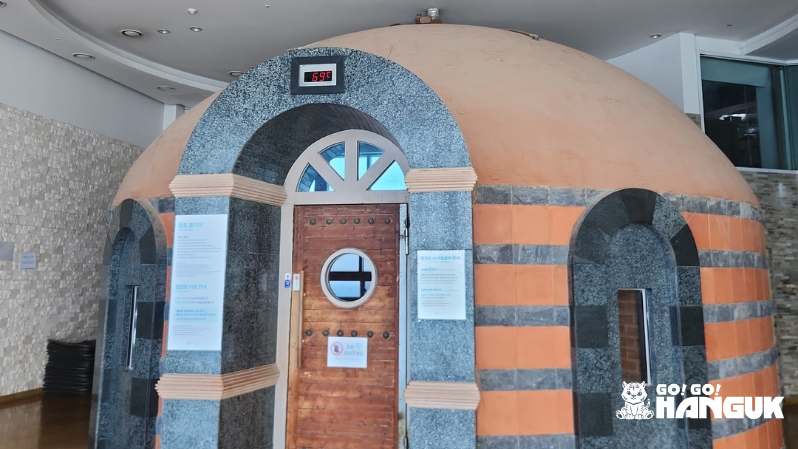
The Korean traditional spa is divided into three main sections to balance privacy with social interaction. There are strictly separate areas for men and women where it is mandatory to go completely naked. While this may make some foreigners feel uncomfortable, it is the standard norm in Korea, and locals are well-accustomed to same-sex nudity.
Located within these gendered areas, the bathing zone contains showers, various pools with different water temperatures, and some saunas or Turkish baths.
In contrast, the common area is a shared space for both men and women where you must be dressed. Upon entry, you are provided with a specific “pajama” uniform—usually a short-sleeved shirt and shorts—which you wear after your initial shower.
Iconic amenities and services
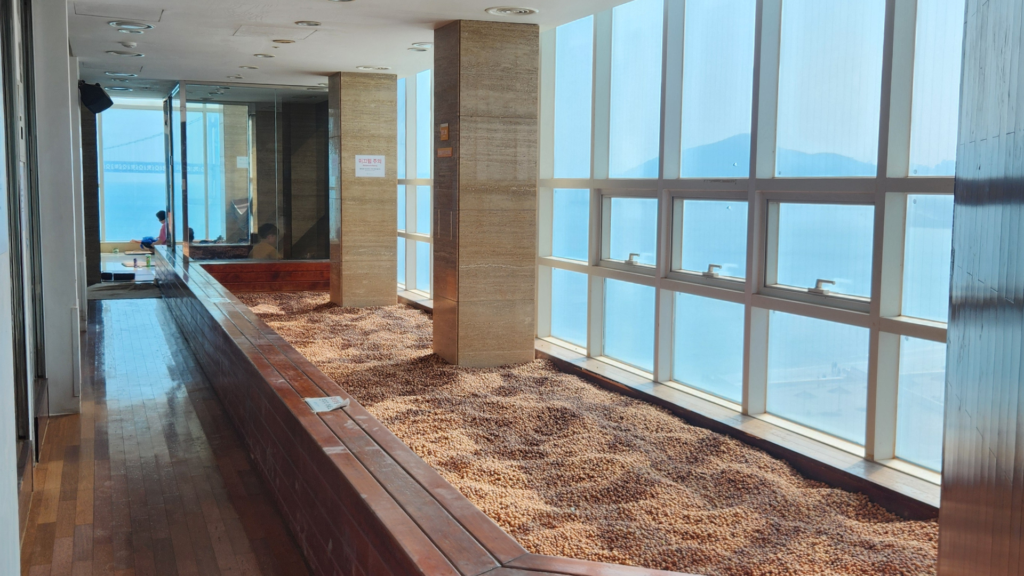
The common area is where the social magic happens, featuring a bar, various themed saunas, and unique snacks.
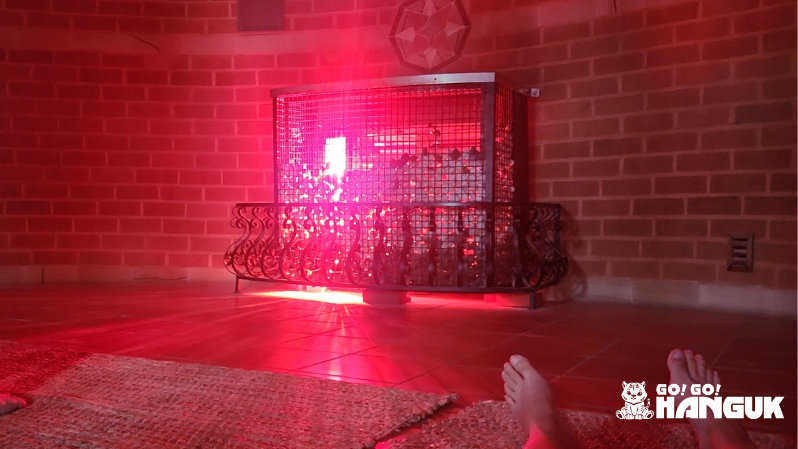
The common area of the Korean traditional spa offers a variety of themed saunas that go far beyond classic heat, allowing you to experience cold saunas with zero-degree ice walls or aromatic saunas infused with the scents of pine wood, ginseng, and other medicinal herbs.
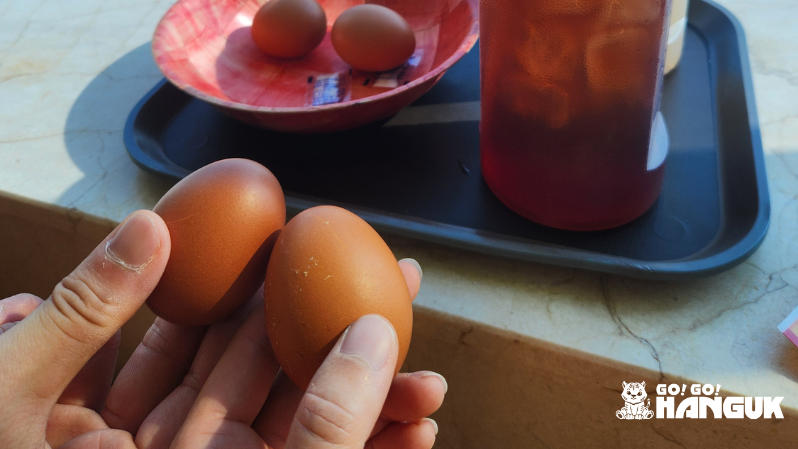
A signature part of the jjimjilbang experience is enjoying unique sauna snacks, specifically the hard-boiled eggs that are famously cooked directly on the heated floors of the saunas. These snacks are often paired with a cold drink from the bar to help you rehydrate after your session.
For those seeking deeper relaxation, the famous Korean scrub, or seshin, is one of the most popular extra services available. During this treatment, a professional provides a very energetic rubdown that can feel almost painful at the time, but it ultimately leaves the skin incredibly smooth and fragrant. If you are looking to save money while still enjoying this tradition, you can even arrange to scrub a friend’s back instead of hiring the specialized staff.
How to navigate your visit
Entering a Korean traditional spa follows a specific ritual to ensure a smooth experience:
- Entry and key: At the entrance, you pay a fee (usually between 6 and 10 euros) and receive a bracelet with a key.
- Storage: Use the key to store your shoes and clothes in a locker.
- The shower first: Before entering any pools, you must take a thorough shower. You only take your bracelet and perhaps a small towel into this area.
- Payment: The bracelet is also used to record extra services like massages, scrubs, or snacks. You pay the total balance for these extras when you leave.
- Staying overnight: Because admission is valid for 24 hours, many people—including budget-conscious backpackers—choose to sleep there. Dedicated rooms offer thin mattresses or mats and pillows for sleeping on the warm floor.
Foreign-friendly jjimjilbangs in South Korea
For travelers seeking a foreign-friendly experience, several jjimjilbangs stand out for their accessibility, English-speaking staff, or high-end facilities.
In Seoul, SPAREX (Dongdaemun and Dongmyo branches) is popular for its traditional hanok interior and large communal spaces that are welcoming to beginners. Dragon Hill Spa in Yongsan is another top choice, often praised for being English-friendly and featuring extensive entertainment like a cinema and arcade. For female travelers, Spa Lei in Gangnam offers a serene, women-only environment with English signage and a reputation for high-quality scrubs.
If you prefer a more luxurious, modern atmosphere, Aquafield (located in Goyang and Hanam) provides premium facilities and rooftop pools, while Busan’s Spa Land Centum City is widely considered the best in the country for its 5-star amenities and 13 themed saunas.
Conclusion
The jjimjilbang is a unique blend of a health club, social lounge, and budget hotel. Whether you are looking for a deep skin exfoliation or just a place to hide away from the busy city streets, it is an essential Korean experience. To learn more about Korean life and culture, follow the Go! Go! Hanguk blog.