Skip to content


Last updated: April 2026
For students looking for high-quality education with incredible value, South Korea remains a premier destination. Preparing for your move is all about knowing what to expect regarding tuition fees, housing, health care, and lifestyle costs. We’ve put together this updated guide on the cost of studying in Korea to ensure you have everything you need to plan a successful and stress-free stay.
Cost of studying in Korea by language course
The cost of studying in Korea varies depending on the school you choose, the duration of the course, and the city in which you want to live and study. Seoul and Busan have different costs of living.
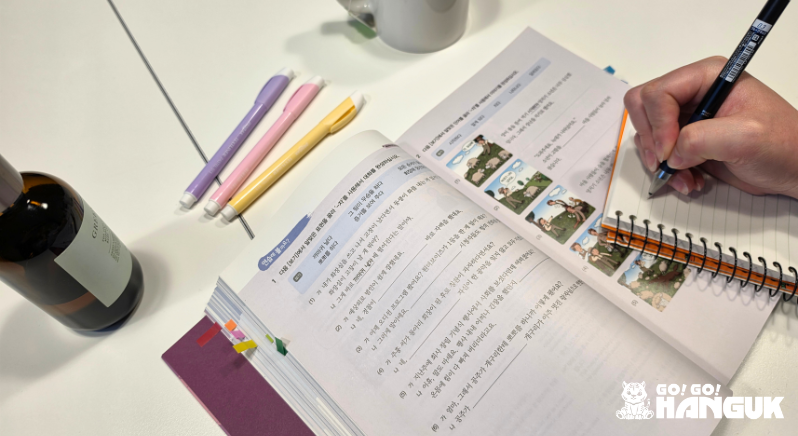
In general, the cost of a 3-month Korean language course at a university in 2026 is KRW 1,500,000–1,860,000 (approx. USD 1000-1300). While many schools include extra-curricular activities in this fee, please note that textbooks are now often sold separately (averaging KRW 50,000–80,000 per level).
For a 6-month Korean course, you should budget approximately KRW 3,600,000–4,200,000 (approx. USD 2400–2800), depending on the current exchange rate and the specific institution.
These prices mainly concern Seoul. However, if you choose to study in cities like Busan or Daegu, the tuition for a 3-month course is significantly more affordable, typically ranging between KRW 1,500,000–1,650,000 (approx. USD 1000–1100).

Cost of studying in Korea by accommodation type
The cost of studying in Korea definitely depends on the accommodation you’ll book. Language students have several accommodation options to choose from: university dormitory, goshiwon, share house, and host family.
The most common choice among students is the dormitory for its logistical positioning, as it is located on or near campus. They are also highly economical – the rent for three months in a double room in a dormitory costs around KRW 900,000-1,300,000 (USD 600-900), with the possibility of renewing the contract for further quarters. The rent includes utility bills, and a double room with a private bathroom. Some universities also offer private rooms at a higher price, but availability is always very limited, and goes in order of demand.
An additional cost in the dormitory concerns the bedding. Sheets, pillows, and blankets are not included in the price, but you have to buy them on your own or buy them directly from the dormitory for about USD 30 before you can move into your room.
The goshiwon is the second most popular budget option for off-campus students. The price of a goshiwon is around KRW 400,000-600,000 (approx. USD 300-400) per month, for a furnished single room with a private bathroom in a building with common areas such as a kitchen and laundry. We discuss this in detail in our article on goshiwons.
The share house is the ideal option for those who want to share a house with Koreans and live in an international environment. Share houses can be found in different districts of the city and offer both private and shared rooms. The price varies depending on several factors, but in general the average price of a private room in a central area is KRW 400,000-600,000 (approx. USD 300-400) per month, including utility bills.
The last accommodation option worth considering is the homestay. Homestay in Korea means being in direct contact with a Korean family, learning customs and traditions, practising the language on a daily basis, and above all, eating excellent home-cooked Korean food. The price of a homestay in Korea is about KRW 300,000- 400,000 per week (approx. USD 200-300) and includes breakfast and dinner at home. You can also opt for breakfast only at a lower price.
For details on prices, please contact us or consult the accommodation page of our website.
Cost of student health insurance in Korea
Another common concern before moving abroad is health insurance. In South Korea, the system ensures you are covered from day one, but the type of insurance changes as your stay progresses.
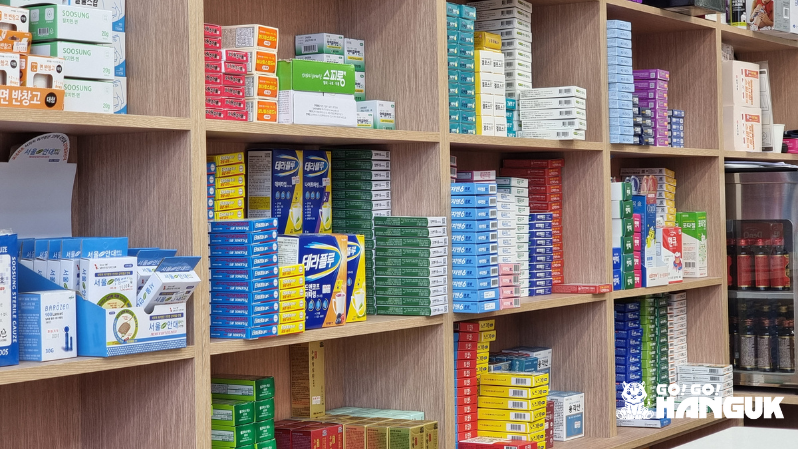
During the first 6 months, most students start with private health insurance coordinated through their university. This is very affordable, costing a one-time fee of approximately KRW 60,000-100,000 (approx. USD 40-70) for the entire six-month period. This coverage is generally sufficient for standard medical treatments and doctor visits during your first semester.
Once you have resided in Korea for six months, you are required by law to enroll in the National Health Insurance (NHIS). This provides more comprehensive coverage similar to that of a Korean citizen. The monthly premium for international students is typically between KRW 75,000 and 80,000, as students receive a significant discount on the standard rate.
While having health insurance is mandatory to live and study in Korea, the system is designed to be accessible, starting with a low-cost initial option before transitioning to the full national plan. Contact us for more details about your university’s health insurance plan.
Cost of food and school cafeteria
Food is indeed another factor that will impact the cost of studying in Korea. All Korean universities offer a cafeteria service for students on Korean language courses. There is a charge for the cafeteria, and it is accessible to all, even those not using the dormitory.
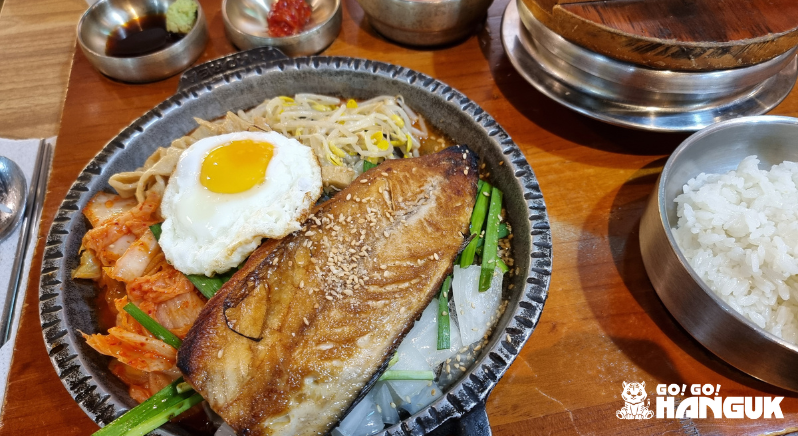
Meal plans, or meal vouchers, are available for dormitory students, but not all universities offer them. In general, the cost of a single meal of Korean cuisine is KRW 3,000-5,000 (approx. USD 2).
For those who do not want to eat in the cafeteria, eating out in Korea is very cheap, especially at lunchtime. The most common choices are noodles, or ramyeon, at KRW 6,000 – 10,000 KRW (approx. USD 4.50–7.50), for a full bowl, while a set menu at lunch in restaurants of various types can be found for KRW 10,000-15,000 (approx. USD 7.50–11). Dinner varies depending on the type of restaurant, but on average for a standard restaurant, meal cost around KRW 10,000-25,000 (approx. USD 7–19) per person.
An inexpensive alternative are dosirak, or packed meals in ready-made boxes that can be bought in pyeonuijeom (편의점), the Korean convenience stores, for various prices. They usually cost between KRW 4,000 and KRW 10,000 (approx. USD 3–7.50).
For a more extensive list of prices, check out our article on the cost of living in South Korea.
Cost of transport
If you live in a university campus dormitory in Korea, you won’t have to spend too much on public transport, as everything you need is either on campus or in the neighborhood of the university.
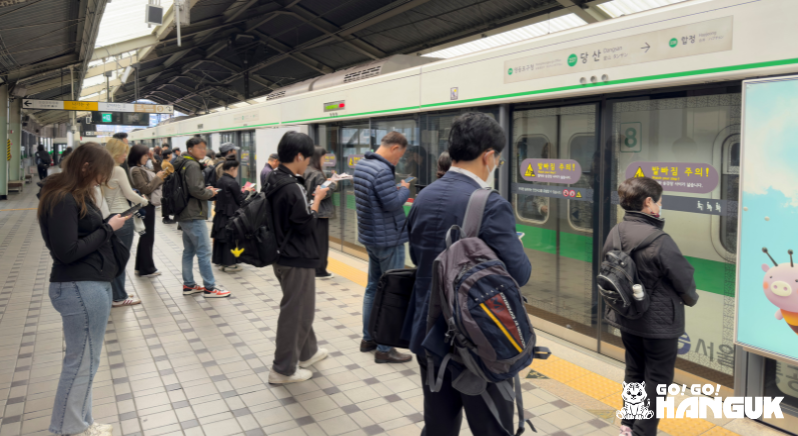
For travel by metro, the basic price of a ticket is about KRW 1,550 (approx. USD 1), and the fare goes up according to the distance traveled. The same goes for the bus, which is very popular in Seoul as well as in Busan or Daegu. Read the article on Korea’s public transportation to learn how to use Korean transport efficiently.
Taxis are also quite cheap, or at least much cheaper than taxis in most Western countries. In fact, the basic fare starts at KRW 4,800 (approx. USD 3.70–3.80) for the first 1.6 to 2 km, increasing according to the kilometers traveled. Taxis are very popular in Korea, especially in the evening if you miss the last train home.

Cost of prepaid SIM cards
As for SIM cards, phone contracts in Korea are often for periods of at least 1-2 years. There are options for those wishing to make short contracts, with some phone companies allowing you to renew your contract monthly with rechargeable SIM cards. The average cost starts from KRW 30,000 per month (approx. USD 20) depending on the amount of data usage. At Go! Go! Hanguk, we work with phone companies that offer SIM cards with monthly contracts and can help you get one if you sign up with one of the schools on our site. Contact us if you need help!
We hope this list of prices will help you get a more complete picture of the cost of studying in Korea.
Contact us for information on how to apply for a Korean student visa and a language course.