Skip to content


Last updated: March 2026
Embarking on a journey to study in South Korea is an exciting step, but navigating the visa process can often feel like the most daunting part of the preparation. Whether you are aiming to master the language for a future career or simply want to immerse yourself in the vibrant culture of Seoul or Busan, having the right legal status is essential. In this guide, we break down the latest requirements for the D-4 Korean student visa to ensure your transition to life in Korea is as smooth as possible.
What is a D-4 Korean student visa?
While the D-2 visa is reserved for full-time degree-seeking students (Bachelor’s or Master’s), the D-4 visa is specifically designed for those enrolled in non-degree technical training or intensive Korean language programs at university institutes. It serves as the primary gateway for international students to live in Korea for a minimum of 6 months up to two years while focusing exclusively on language learning.
One of its key advantages is the flexibility it offers: after six months of diligent study, D-4 holders can even apply for permission to work part-time, helping to support their lifestyle while they learn.
Please note that, your Korean student visa will be cancelled by the Korean immigration office if you stop attending school, even if you are still working in Korea.

Language course and Korean student visa application
In order to apply for a Korean student visa, it is necessary to apply for a Korean language course at a university and to obtain your Certificate of Admission (CoA).
To ensure a smooth transition, you should aim to complete your application and submit all required documentation 2–3 months before your course begins.
Most university language programs in Korea operate on a quarterly schedule, with terms starting in March, June, September, and December. While you can register for a program up to one year in advance to secure your spot, the formal visa documentation—such as bank statements and apostilled documents—must typically be issued within 30 to 90 days of your application to be considered valid by Immigration. We recommend starting the ‘paperwork phase’ at least 90 days out to account for any shipping or authentication delays.
To enroll in a Korean language course and apply for a D-4 visa, you will typically need to prepare the following documents:
- Official school application form: Most universities provide a digital portal, though some still require a hand-signed physical copy.
- Study plan and personal statement: A brief motivational letter in English (or Korean) including a self-introduction and your reasons for studying in Korea.
- Passport copy: Ensure your passport is valid for at least 6 months beyond your intended stay.
- Passport-sized photo.
- Academic records: A copy of your highest qualification (High School Diploma or University Degree) and official transcripts or school report cards.
- Proof of financial stability: A bank statement showing a balance of at least US$10,000 (or the equivalent in your local currency).
Additional documents may be requested based on the student’s history and the specific institute you are applying at, such as certified English translations or an apostille to legalise school certificates for abroad.
To find out the requirements of the school you have chosen from our website, you can contact us by email.
After enrolling in the language school
Once all the documents required by the language school have been provided, the school will prepare the invoice for the payment of the school fee. Payment must be made by international bank transfer in US dollars or Euros, as it is not possible to send Korean won payments from abroad.
After confirmation of receipt of payment, the school will be ready to issue the admission certificate, the Certificate of Admission (CoA). This is a fundamental document to get a Korean student visa. To complete the visa procedures, you will have to go with your certificate to your local Korean embassy.
At the embassy you will also have to provide a series of documents, mostly the same ones already used for enrolling in the school.

Validity of the D-4 Korean student visa
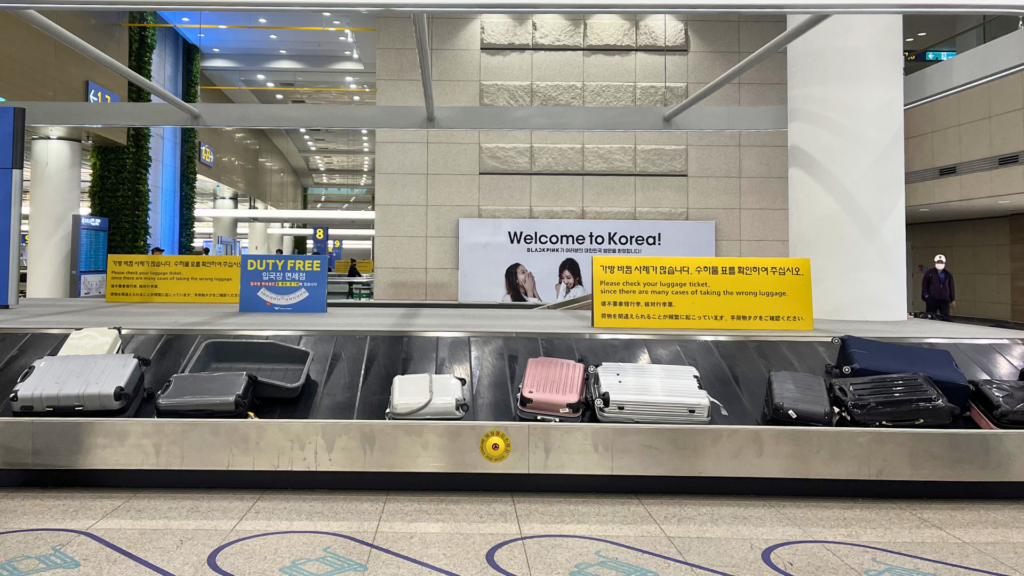
To be valid, the Korean student visa must be stamped upon your arrival at the airport in Korea. You have 90 days to enter Korea with this visa from the moment it is issued at the embassy. It will be valid from the day of your arrival in South Korea and from passport controls at the airport.
As mentioned above, the visa is valid only for the period of study at the university and is linked to the course itself. When you finish the language course you can stay in Korea for a few days before returning home, but be careful not to exceed the expiry date on your visa.
The crucial role of attendance
It is important to understand that the validity of your D-4 visa is strictly tied to your classroom presence. Korean Immigration maintains a high standard for ‘General Trainees’ attending language schools; therefore, maintaining an attendance rate of at least 70% to 80% is mandatory for visa extensions (the specific threshold can vary slightly by school, but 80% is the safest benchmark).
If your attendance falls below 70%, you may be denied a visa extension and required to leave the country immediately. Furthermore, if you plan to work part-time, most schools and immigration offices require a minimum attendance of 90% from the previous semester to grant work permission. High attendance isn’t just about passing your levels—it is the legal proof that you are fulfilling the primary purpose of your stay in South Korea.
Part-time work in Korea
Those who get a D-4 Korean student visa can start working part-time after the first 6 months in Korea. Language students can generally work up to 20 hours per week, but recently schools are becoming more inflexible and demanding. In order to work part-time, some schools require a high level of attendance in class (minimum 90% as aforementioned) and a level of Korean equal to at least a TOPIK 2 certificate. Otherwise, the limit of working hours is 10 hours per week. Learn more about part-time work in Korea in this article.
Now that you know how to get a Korean student visa, you can choose the language school you prefer and contact us to start your application procedures. You can ask us all your questions you want about the registration procedure and the language course chosen from our website.
Do you want to study Korean online? Go! Go! Hanguk offers online Korean courses for beginners in collaboration with Korean universities, where you will get an official course attendance certificate. Click here for more detailed information.