Skip to content


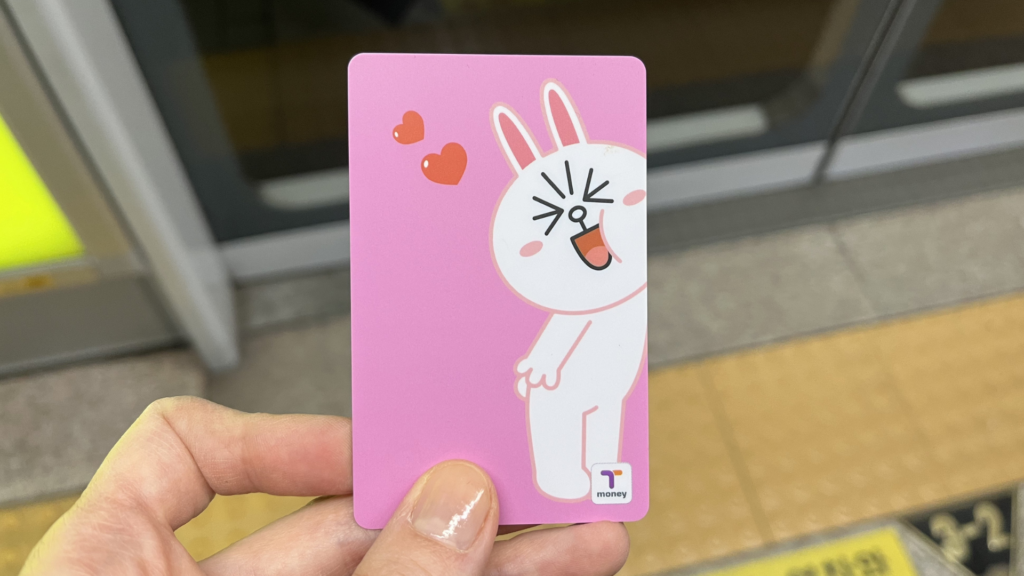
In South Korea, especially in large cities, people get around using public transportation. The subway is one of the most common and efficient forms of public transportation. For convenience, we recommend purchasing a rechargeable T-money card, but there is now a new “reimbursement” option to consider as well. Let’s take a look at the latest updates on Korea’s public transportation cards.
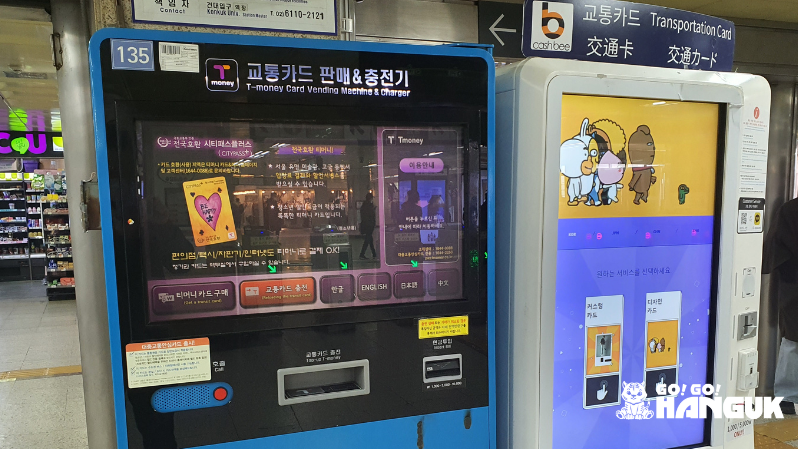
What is a T-money card?
Subway lines in Korea are highly efficient and affordable. As of the latest updates, the base fare for the Seoul subway starts at 1,550 won (roughly 1.10 USD) when using a transportation card, following recent fare hikes to support system maintenance.
Single tickets can still be purchased from machines at each station, but the most convenient way to travel is with a T-money card. You can purchase this rechargeable card at convenience stores such as GS25, CU, and 7-Eleven for approximately 2,500 to 5,000 won (depending on the design).
This prepaid card can be recharged at any metro station or convenience store. It is particularly convenient for “transfers”: if you switch from the metro to a bus (or vice versa) within 30 minutes, you receive a significant discount, often only paying a small distance-based surcharge rather than a new base fare. Because it uses RFID technology, you must tap your card on the electronic sensors both when entering and exiting the subway or bus to ensure the correct fare is calculated.
The new Climate Pass for Seoul
If you live in Seoul and use public transportation frequently, there is another option to consider: the Climate Pass (기후동행패스).
The Climate Pass is Seoul’s new transportation benefit program, introduced in September 2026 as part of the nationwide K-Pass system. Instead of paying a fixed monthly fee upfront for unlimited rides like the previous 30-day Climate Card, the Climate Pass combines K-Pass reimbursement with additional Seoul-specific benefits.
For eligible users, the system calculates your transportation spending and automatically applies the option that provides the greater benefit.
General users can receive a 20% reimbursement on eligible public transportation spending, while Seoul’s youth benefit has been expanded to include people aged 19–39, who can receive a 30% reimbursement if they meet the eligibility requirements.
However, the Climate Pass is different from the old prepaid Climate Card and is primarily intended for Seoul residents who are eligible for K-Pass. If you’re a tourist or short-term visitor, the short-term Climate Card passes remain available for 1, 2, 3, 5, or 7 days.
Where else can you use T-money?
The T-money card is more than just a transit pass. It acts as a prepaid debit card in most convenience stores, certain bakeries (like Paris Baguette), and even some taxis.
If you have a Korean bank account and a Residence Card (ARC), you can link your bank card to function as a “post-paid” T-money card, where expenses are debited once a month. However, for tourists and short-term visitors, the rechargeable “pre-paid” version remains the standard.

Tips for navigating the subway
The South Korean subway system is world-class, but the scale varies by city. The Seoul subway system is massive, featuring 23 lines and over 700 stations that can take you almost anywhere in the metropolitan area. In contrast, Busan offers a more streamlined experience with 6 lines (4 main metro lines plus the Donghae Line and Gimhae Light Rail) serving 158 stations.
Here are a few modern tips for your journey:
- Avoid rush hour: To stay comfortable, avoid traveling between 7:30 – 9:30 a.m. and 6:00 – 7:30 p.m. In Seoul: Be extra wary of Line 2 (the green circle line) and Line 9 (the gold express line). In Busan: Line 1 (orange) and Line 2 (green) are the busiest, especially around Seomyeon Station, where the two lines intersect.
- Language is no barrier: Don’t worry about getting lost; all announcements, digital screens, and physical signs are available in Korean, English, Japanese, and Chinese.
- Essential apps: Download Naver Maps or KakaoMap. While “Subway Korea” is helpful for simple routing, Naver Maps provides real-time data on exactly how crowded each subway car is and precisely where to stand on the platform for the fastest transfer.
- Traveling between cities: If you want to travel between Seoul and Busan (or beyond), use the KTX or SRT express trains.
- In Seoul: Trains depart primarily from Seoul Station (서울역) and Yongsan Station (용산역).
- In Busan: The main hub is Busan Station (부산역).
- Bonus Tip: From Cheongnyangni Station (청량리역) in Seoul, you can take the KTX-Eum to reach Pyeongchang or the east coast much faster.
We hope that you’re ready to navigate Korea’s public transportation cards. With your T-money or Climate Pass in hand, the entire country is now just a tap away.
For more tips on making your life in Korea easier, check out our article on the most useful apps in Korea and keep following our blog.