Skip to content


Banking in Korea can feel overwhelming for foreigners, especially with language and system differences. Many essential tasks like opening an account, receiving international transfers, or updating visa info still require in-person visits. Knowing what to expect and learning a few key Korean phrases for the bank can make your experience much smoother. With a little preparation, handling your banking needs in Korea becomes much easier and stress-free.
Korean phrases for the bank you need to know
1. Common Korean vocabulary
Before we jump into useful Korean phrases for the bank, let’s first check out some basic vocabulary to help you recognize common items and terms.
| Hangul | Transliteration | English |
| 은행 | Eunhaeng | Bank |
| 계좌 | Gyejwa | Account |
| 통장 | Tongjang | Bank book |
| 비밀번호 | Bimilbeonho | Password |
| 이체 | Eeche | Transfer |
| 공인인증서 | Gongininjeungseo | Digital certificate* |
| 수수료 | Susuryo | Fees |
| 외국인등록증 | Waegukindeungrokjeung | Korean residence card |
| 한국내 전화번호 | Hanguknae jeonhwabeonho | Korean phone number |
| 여권 | Yeokgwon | Passport |
| 비자 | Bija | Visa |
*A digital certificate is an electronic “password” that allows a person or organization to exchange data securely over the Internet using the public key infrastructure (PKI). It is also known as a public key certificate or identity certificate.
These are common terms that will definitely come in handy when you need assistance at the bank.
2. Opening account
If you’re a foreigner looking to open a new account at the bank, these helpful terms can make communication easier. Let’s check them out!
- Gyejwareul mandeulgo sipeoyo. (계좌를 만들고 싶어요.): I’d like to open a bank account.
- Oegugin deungnokjeung isseoyo. (외국인 등록증 있어요.): I have my Korean residence card.
- Chekeu kadeureul mandeulgo sipeoyo. (체크 카드를 만들고 싶어요.): I want to make an ATM card.
Want more details? Check out our article on how to open a bank account in Korea!
3. Withdrawing or depositing money
If you’re unsure how to use the ATM, you can go to the counter and use these simple Korean phrases for the bank to ask for help.
- Ipgeumhago sipeoyo. (입금하고 싶어요.): I’d like to make a deposit.
- Chulgeumhalgeyo. (출금할게요.): I’m going to withdraw money.
- Jan-aegi eolmayeyo? (잔액이 얼마예요?): What’s the account balance?
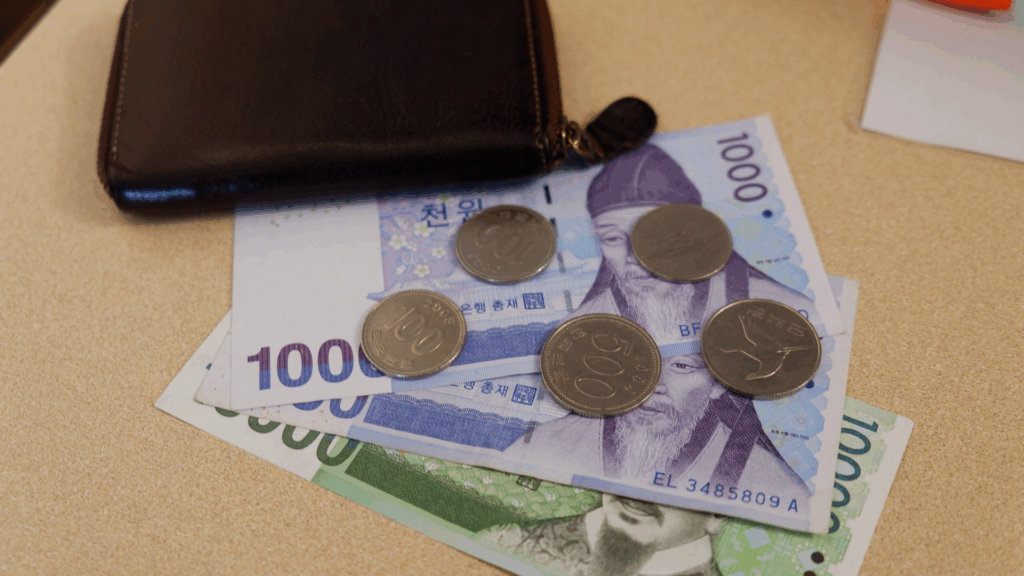
Our article will help you quickly learn how to recognize and count Korean won, making communication easier when you are at the bank.
BONUS! Curious about the required bank balance to study in Korea? We’ve got the answer for you here.
4. Online banking
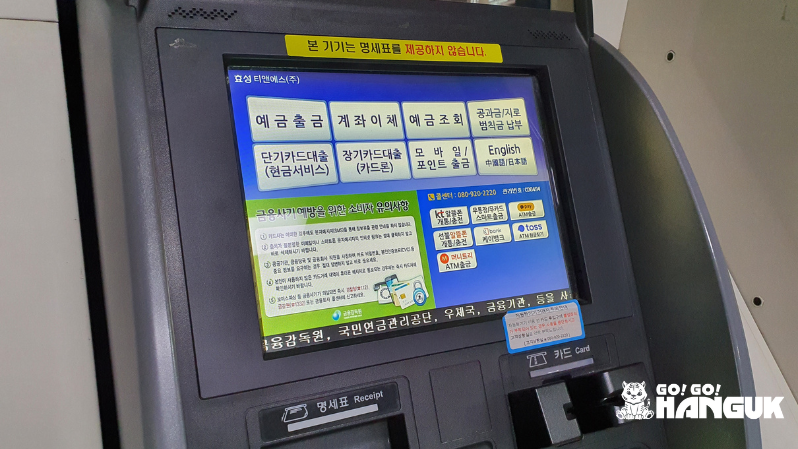
Most people in South Korea rely on online banking for transfers, paying bills, topping up transport cards, managing subscriptions, and more — all from their phones. Let’s see how to communicate that!
- Inteonet baengking sincheonghago sipeoyo. (인터넷뱅킹 신청하고 싶어요.): I’d like to apply for internet banking.
- Gongin injeungseoreul balgeuphago sipeoyo. (공인인증서를 발급하고 싶어요.): I would like to apply for a digital certificate.
- Susuryo innayo? (수수료 있나요?): Are there fees?
5. International transfers
Wondering how to handle international transfers? Here’s how you can begin.
- Haewaeseo doni deureowanneunji hwakinhaego sipeoyo. (해외에서 돈이 들어왔는지 확인하고 싶어요.): I want to check if my overseas transfer has arrived.
- Seuwipeuteu kodeu isseoyo? (스위프트 코드 있어요?): Do you have the SWIFT code?
- Songgeum susuryoneun eolma-yeyo? (송금 수수료는 얼마예요?): How much will I be charged for a wire transfer?
When transferring money to an international bank account, bank tellers will usually ask for the SWIFT code. There may also be transfer fees, so it’s a good idea to check with them in advance.
6. Updating personal information
If your visa status, Korean residence card, or phone number changes, you must update your bank. These handy Korean phrases will help you when you’re at the bank.
- Bija sangtaega bakkwieosseoyo. Jeongbo sujeonghalgeyo. (비자 상태가 바뀌었어요. 정보 수정할게요.): My visa status changed. I’d like to update my info.
- Sae oegugin deungnokjeung-ieyo. Deungnok bakkwo juseyo. (새 외국인등록증이에요. 등록 바꿔 주세요.): This is my new Korean residence card. Please update my record.
- Jeonhwabeonhoreul eopdeitehae juseyo. (전화번호를 업데이트해 주세요.): Please update my phone number.
7. Resetting password/lost card
Sometimes accidents happen, but don’t worry — we’re here to help! It’s not too difficult to reset a password or replace a lost card at the bank. Check out how to communicate below.
- Bimilbeonhoreul jaeseoljeonghago sipeoyo. (비밀번호를 재설정하고 싶어요.): I would like to reset my password.
- Kadeureul ilheobeoryeosseoyo. Jaebalgeup batgo sipeoyo. (카드를 잃어버렸어요. 재발급 받고 싶어요.): I lost my card. I’d like to get a replacement.
We hope these handy Korean phrases for the bank make things easier for you in different situations! Check out our other helpful vocabulary and phrase list for daily life as well!
For more information on the Korean language and culture, keep following the Go! Go! Hanguk blog and don’t hesitate to contact us about living and studying in Korea.