Skip to content


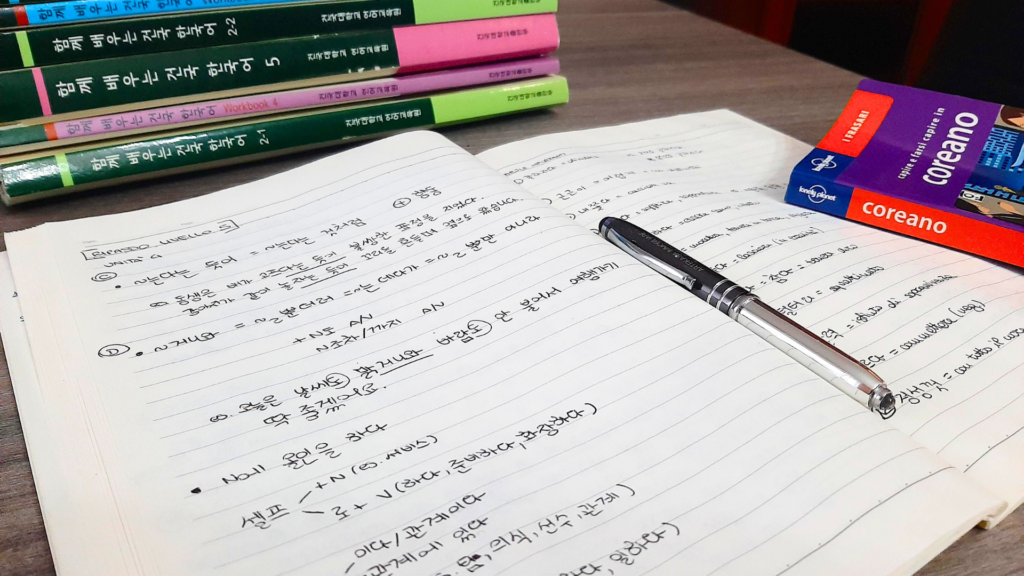
If you’ve ever tried learning Korean, you’ve probably realized that some words simply don’t translate well into English. These aren’t just vocabulary gaps, but they reflect culture, emotion, and ways of thinking that are deeply rooted in Korean society.
In this guide, we’ll explore 15 fascinating Korean words difficult to translate, complete with Hangul, romanization, meanings, and relatable real-life scenarios to help you understand how they’re actually used.
15 fascinating Korean words difficult to translate
1. 정 (jeong)
Meaning: A deep emotional bond that develops over time through shared experiences.
You might not notice 정 forming, but one day it’s just there, like when you feel attached to a place, a routine, or even a local cafe you always go to. Most Korean words difficult to translate carry meanings that go beyond direct definitions, and this tops the list.
Example:
이 카페 자주 오니까 정 들었어.
I kape jaju onikka jeong deureosseo.
I’ve come here so often that I’ve grown attached to this cafe.
2. 눈치 (nunchi)
Meaning: The ability to read the room and understand unspoken social cues.
Imagine being in a group setting where everyone is quiet, but one person keeps talking loudly. This is where 눈치 becomes important. This is one of the most essential Korean words difficult to translate, as it reflects awareness, timing, and emotional intelligence in social situations.
Example:
지금 분위기 좀 봐… 눈치 좀 챙겨.
Jigeum bunwigi jom bwa… nunchi jom chaenggyeo.
Read the room… be a little aware.
3. 한 (han)
Meaning: A deep feeling of sorrow, resentment, and emotional weight built over time.
This is often felt when watching emotional movies or hearing stories of hardship that stay with you long after.
Example:
그 드라마 너무 슬퍼서 한이 느껴졌어.
Geu deurama neomu seulpeoseo hani neukkyeojyeosseo.
That drama was so sad that I could feel that deep sorrow.
4. 서운하다 (seounhada)
Meaning: A subtle feeling of emotional disappointment when someone lets you down.
It’s that quiet feeling when a close friend forgets something important to you. This is one of the most essential Korean words difficult to translate, as it reflects awareness, timing, and emotional intelligence in social situations.
Example:
생일인데 메시지도 없어서 좀 서운했어.
Saengirinde mesijido eopseoseo jom seounhaesseo.
It was my birthday, and they didn’t even text.. I felt a bit hurt.
5. 답답하다 (dapdapada)
Meaning: Feeling frustrated, stuck, or emotionally suffocated.
You might feel this when something isn’t going your way and you can’t fix it.
Example:
와이파이 안 돼서 진짜 답답해.
Waipai an dwaeseo jinjja dapdapae.
The Wi-Fi isn’t working ugh it’s so frustrating.
6. 억울하다 (eokulhada)
Meaning: Feeling unfairly blamed or wronged.
This is the feeling when you get blamed for something you didn’t do, and no one believes you.
Example:
나 진짜 안 했는데 왜 나만 혼나… 너무 억울해.
Na jinjja an haenneunde wae naman honna… neomu eokulhae.
I really didn’t do it! Why am I the only one getting in trouble? It’s so unfair.
7. 애교 (aegyo)
Meaning: Acting cute in a playful, affectionate way.
This concept is deeply embedded in Korean culture and doesn’t have a direct equivalent in English. You’ll often see this in friendships or relationships, especially when someone wants a favor.
Example:
한 번만 봐주면 안 돼~ 애교 좀 부릴게.
Han beonman bwajumyeon an dwae~ aegyo jom burilge.
Can you let it slide just this once? I’ll act cute for you.
“Interestingly, ‘aegyo’ has become so globally recognized that it is now officially included in the Oxford English Dictionary. Check our article for the list of untranslatable Korean words entering the English dictionary!
8. 썸 (sseom)
Meaning: The stage where two people are more than friends but not officially dating.
That confusing period where you text all the time but haven’t defined the relationship yet. This modern expression is widely used among younger generations and is one of the more relatable Korean words difficult to translate today.
Example:
요즘 매일 연락하는데… 우리 썸 타는 거 맞지?
Yojeum maeil yeollakhaneunde… uri sseom taneun geo matji?
We talk every day… we’re kind of a thing, right?

9. 여운 (yeoun)
Meaning: The lingering feeling after an experience.
Like when you finish a movie and just sit there thinking about it.
Example:
영화 끝났는데도 여운이 계속 남아.
Yeonghwa kkeutnanneundedo yeouni gyesok nama.
Even after the movie ended, the feeling is still lingering.
10. 낯가리다 (natgarida)
Meaning: Feeling shy or awkward around new people.
That moment when you meet someone new and don’t know what to say. It’s more specific than just being introverted.
Example:
나 낯가려서 처음 보면 말 잘 못 해.
Na natgaryeoseo cheoeum bomyeon mal jal mot hae.
I’m shy, so I don’t talk much when I first meet people.
11. 심쿵 (simkung)
Meaning: A sudden “heart-thumping” feeling caused by excitement, attraction, or surprise.
This slang term perfectly captures fleeting emotional reactions, making it one of the fun Korean words difficult to translate. Usually happens when someone does something unexpectedly attractive or cute.
Example:
갑자기 웃는데 진짜 심쿵했어.
Gapjagi utneunde jinjja simkunghaesseo.
They suddenly smiled, and my heart skipped a beat.
12. 현타 (hyeonta)
Meaning: A sudden return to reality, often accompanied by regret or emptiness.
Like after spending too much money or staying up too late.
Example:
밤새 넷플릭스 보고 나니까 현타 왔어.
(Bamsae netpeullikseu bogo nanikka hyeonta wasseo.)
I binged Netflix all night and now I regret it.
13. 멘붕 (menbung)
Meaning: A mental breakdown or moment of shock.
When everything goes wrong at once, and your brain just stops working. Short for “mental collapse,” this slang word is widely used in casual conversation.
Example:
지갑 잃어버린 거 알고 멘붕 왔어.
Jigap ilheobeorin geo algo menbung wasseo.
I realized I lost my wallet and completely freaked out.
14. 짠하다 (jjan-hada)
Meaning: Feeling emotional and sympathetic toward someone.
The feeling you get when you see someone struggling quietly. It’s a mix of empathy and melancholy, which makes it one of the more emotional Korean words difficult to translate.
Example:
혼자 야근하는 거 보니까 좀 짠하다.
Honja yagunhaneun geo bonikka jom jjan-hada.
Seeing them work overtime alone makes me feel sorry for them.
15. 말맛 (malmat)
Meaning: The emotional nuance or “flavor” of words.
It’s about how something sounds and feels, not just what it means.
Example:
이 표현은 말맛이 좋아.
I pyohyeoneun malmati joa.
This expression has a nice nuance.
Alongside these Korean words difficult to translate, Konglish is another fascinating aspect of the language, where English words are adapted with new meanings in Korean usage. Explore Part 1 and Part 2 of our Konglish guides.
Which of these Korean words difficult to translate did you already know?
For more information on Korean language and culture, keep following the Go! Go! Hanguk blog and don’t hesitate to contact us about living and studying in Korea.