Skip to content


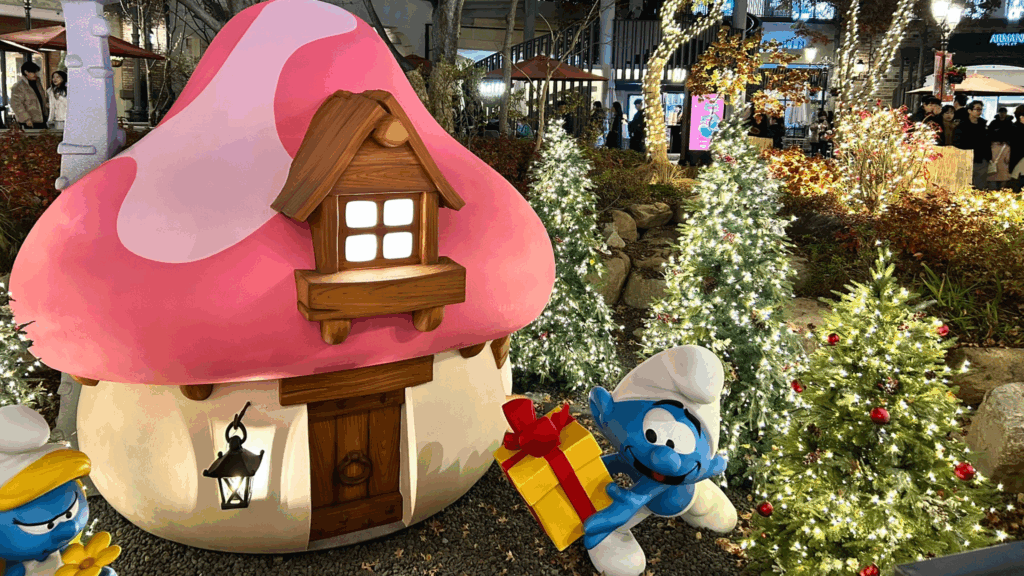
Christmas in Korea has its own unique charm. While it isn’t as traditional or family-centered as in many Western countries, the festive season still brings twinkling lights, romantic date nights, brightly decorated cafes, and cheerful carols filling the streets. But if you really want to experience the holiday like a local, learning the essential Korean words for Christmas will make everything feel more meaningful. Let’s find out together in this article.
1. Christmas in Korea
Before diving into vocabulary, it helps to know the atmosphere you’re stepping into.
In Korea, Christmas (크리스마스, keuriseumaseu; loanword) is less of a family gathering and more of a couple’s holiday or a chance to enjoy the city’s winter events. It’s still a national holiday, which means schools and many offices are closed. Christmas Eve (크리스마스 이브, keuriseumaseu Ibeu; loanword), however, is a normal working day, so the real excitement happens in the evening.
Interested to know how Koreans celebrate Christmas? Check it out here.
Understanding the Korean words for Christmas helps you appreciate the cultural mix that makes the holiday feel so different here.
2. Two ways to say Christmas
One key distinction is between the casual loanword and the formal Sino-Korean term.
- 크리스마스 (Christmas, keuriseumaseu; loanword)
This English-derived term is used in almost all daily and commercial contexts: music, decorations, casual greetings, and posters. You’ll hear it everywhere during the holiday season.
- 성탄절 (holy birth day, seongtanjeol; Sino-Korean)
This is the formal or religious term, using Hanja (Chinese characters):
- 성 (聖): holy
- 탄 (誕): birth
- 절 (節): holiday or special day
You’ll see 성탄절 in church announcements, TV news captions, and formal greetings. Learning both terms is key to fully understanding Korean words for Christmas in cultural and spiritual contexts.
3. How to wish someone Merry Christmas
Greetings vary depending on formality. Here’s a guide to Korean words for Christmas greetings:
Casual
메리 크리스마스! Merry Christmas! (meri keuriseumaseu)
미리 크리스마스! Merry Christmas in advance! (miri keuriseumaseu)
Polite
즐거운 크리스마스 보내세요! Have a joyful Christmas! (jeulgeoun keuriseumaseu bonaeseyo)
Formal / Religious
행복한 성탄절 되십시오 Wishing you a blessed Christmas (haengbokan seongtanjeol doesipsio)
Including these in your vocabulary ensures your Korean words for Christmas knowledge is socially appropriate and context-aware.
4. Santa Claus in Korea
A unique twist on one of the most used Korean words for Christmas:
산타 할아버지 (santa harabeoji); literally means “Grandfather Santa” and is a mix of a loanword + native Korean word.
In Korean culture, grandparents represent warmth, kindness, and wisdom. So instead of “Santa Father,” this version makes Santa more familiar and comforting, like a gift-giving grandpa figure.
Nonetheless, the term Santa Claus is also widely used. (산타클로스, santa keullosu, loanword)
5. Christmas food in Korea
In Korea, Christmas isn’t a traditional holiday, so the food isn’t standardized like in the West. Still, you’ll find some unique treats and seasonal favorites.
크리스마스 케이크 (Christmas cake, keuriseumaseu keikeu; loanword)
- 토피넛 라떼 (Toffeenut Latte, topineot Latte; loanword)
Although Christmas treats are mostly desserts, winter foods are enjoyed too:
국 (soup, guk; Sino-Korean)
불고기 (grilled meat, gogi; Sino-Korean)
떡국 (rice cake soup, tteokguk; native Korean)
6. Words to describe the Winter atmosphere
These adjectives describe the mood and setting during the holiday season:
따뜻하다 (warm or cozy, tta-tteuthada; Sino-Korean)
평화롭다 (peaceful, pyeonghwaropda; Sino-Korean)
설레다 (heart-fluttering, seolleda; native Korean)
눈 (snow, nun; native Korean)
눈사람 (snowman, nunsaram; native Korean)
포근하다 (snug or comfy, pogeunhada; native Korean)
7. Festive phrases for Christmas
Learn more phrases you can use during Christmas!
해피 홀리데이! Happy Holiday! (haepi hollidei; loanword)
겨울 잘 보내요! Enjoy the winter! (gyeoul jal bonaeyo, native Korean)
따뜻한 연말 되세요! Wishing you a warm end of the year! (tta-tteutan yeonmal doeseyo; Sino-Korean + native Korean)
즐거운 겨울 보내세요! Have a joyful winter! (jeulgeoun gyeoul bonaeseyo; Sino-Korean + native Korean)
크리스마스 기분 만끽하세요! Enjoy the Christmas mood to the fullest! (keuriseumaseu gibun mankikhaseyo; loanword + Sino-Korean + native Korean)
8. Other Korean words for Christmas
More Christmas vocabulary!
크리스마스 트리 (Christmas tree, keuriseumaseu teuri; loanword)
장식 (decoration, jangsik; Sino-Korean)
선물 (gift, seonmul; Sino-Korean)
포장 (wrapping, pojang; Sino-Korean)
파티 (party, pati; loanword)
연말 (end of year, yeonmal; Sino-Korean)
축하 카드 (greeting card, chukka kadeu; Sino-Korean)
- 캐롤 (carol, kaerol; loanword)
순록 (reindeer, sunnok; Sino-Korean)
썰매 (sleigh, sseolmae; native Korean)
산타 모자 (Santa hat, santa moja; loanword)
루돌프 사슴 (Rudolph the deer, rudolpeu saseum; loanword + Sino-Korean)
Whether you’re living in Korea, studying the language, or simply visiting during winter, understanding these Korean words for Christmas makes the season richer.
We hope you enjoyed this article! For more information on the Korean language and culture, keep following the Go! Go! Hanguk blog, and do not hesitate to contact us about living and studying in Korea.