Skip to content


Last update: July 2026
There can be many reasons for wanting to study Korean in Korea, from K-pop music to ancient Korean traditions. Nowadays, learning a new language has become more accessible through online courses or apps on mobile phones. However, if you really want to learn a foreign language in a serious and native way, the best thing is to live in the country where that language is spoken. In this article, we explain the ways to study Korean in Korea.
1. Pick a Korean language course in Korea
When it comes to studying Korean in South Korea, choosing the right environment is key. Programs generally fall into two categories: university language institutes or private schools. Finding the path that aligns with your specific goals is your first step. Here is a look at what each option offers.
1.1 Studying Korean at universities
Unlike other foreign countries where language courses are run by public schools, the best Korean courses in Korea take place at universities. Korean universities, in fact, offer language courses in the foreign language department, and they are open to anyone who wants to study Korean in Korea intensively.
Korean language courses at universities run from Monday to Friday, for four hours a day, and are usually divided into trimesters of 10 weeks each. Average class attendance and grade point average are crucial for continuing the course in the next term (and level). This is why university courses are made for those who want to devote themselves fully to their studies.
Enrolling in a Korean university program gives you more than just language classes. It grants you full access to the campus ecosystem.
- The student experience: Eat at campus canteens, study in the libraries, join student clubs, and socialize directly with Korean university students.
- Built-in support: Navigating life in a new country is much easier with a university’s dedicated student services. They will guide you through visa renewals, health insurance setup, opening a local bank account, and obtaining your Resident Card.
Go! Go! Hanguk partners with some of the best universities where to study Korean in Korea. We can help you with the application process with the schools listed on the “Language schools” page on our website. There are universities in the three major cities of South Korea: Seoul, Busan, and Daegu. Here you will find the differences between these beautiful cities.
Courses at universities start every March, June, September, and December, with a few exceptions. Courses start from a minimum of 3 months to a maximum of 2 years, and the program follows the language knowledge and skills required in the various levels of the TOPIK (Korean proficiency text).
Application deadlines can be found on each university’s page. Feel free to contact us if you have any questions about enrolment or how to study Korean in Korea.
1.2 Studying Korean at a private school
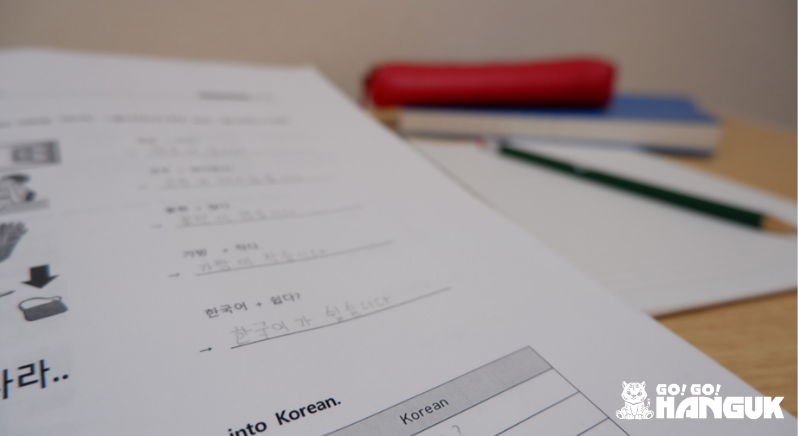
Those who want to study Korean in Korea for a few weeks, without an intensive commitment as required by universities, can still study Korean in Korea by attending Lexis Korea or LTL.
Lexis Korea and LTL offer weekly Korean language courses. Their programs are low-intensity courses for those who want to have a short study experience in Korea. Lessons are flexible, which means you can even sign up for a one-week course, and the price is calculated per week. Or it offers flexible courses for those on working holiday visas who are looking for short-term and not particularly intensive Korean lessons. However, as private schools, they cannot guarantee a student visa.
New courses begin every Monday regardless of your starting level, and you will get plenty of free time to explore Korea after class.
Lexis Korea and LTL offer various types of affiliated accommodations (mini studios, homestays, service apartments, etc.). Contact us to find out more.
1.3 Korean Study trips for 2-3 weeks
If you want to study in Korea for a short period and have a full experience with the Korean language course and cultural activities, we recommend our ‘Study trips’. These are packages that include Korean language courses in the morning, cultural activities in the afternoon, and accommodation in mini studios. Course participants come from all over the world, and the study holiday lasts approximately 3 weeks.
It’s the best way to combine your passion for Korean culture with language study and meet lots of new friends! Click here to see what’s planned.
1.4 Studying Korean in Korea during a Visiting Program
A final option to consider is the university visiting program. You can find it on the ‘Universities’ page of our website. This is a study program suitable for students who are already enrolled in a Bachelor’s degree program in their home country, and who want to do an exchange period abroad, gaining university credits. Courses are generally held every March and September, for a minimum of one semester (meaning approximately 4 months of classes) and a maximum of 1 year with the application for a D-2 student visa through Hanyang University.
However, universities are not affiliated with any particular foreign institution for their Visiting program, which means that anyone can obtain credits. Depending on the university in your home country, recognition of these credits may differ. Hence, it is essential to ask for confirmation before enrolling in a course in South Korea.
2. Get ready to apply for the right visa
If you study Korean in Korea for up to 3 months (to be considered as 90 days), you will not need to apply for a visa, that is, if you have a passport that allows you to enter Korea as a tourist and stay for up to 90 days. As a tourist, you can attend a Korean course at the universities for a term, a shorter course at Lexis Korea, or one of our Study Trips.
If, on the other hand, you wish to study for longer periods of at least 6 months, you will need to apply for a D-4 student visa. We recommend that you read this article with all the details on the D-4 visa.
Finally, if you want to have a mixed experience, including some study, some work, and also travel, you can consider the option of the H-1 Working holiday visa. Read more here or contact your local Korean Embassy.
3. Choose an accommodation
Korean universities provide their students with on-campus accommodation. These are dormitories, with double or private rooms, often with an en-suite bathroom. Dormitories are particularly convenient, in terms of the distance from the campus and their affordable prices.
Staying in a dormitory is not compulsory. If you opt for other options, Go! Go! Hanguk will help you find the right accommodation. We have a wide choice of shared houses, mini studios, and homestays, so don’t hesitate to contact us if you need help with accommodation while you study Korean in Korea. In the meantime, you can check out our university accommodation and dormitory page.

4. Cultural full-immersion in Korea
If you study Korean in Korea, you actually have the advantage of being able to practice the language daily. You can practice what you learned from the books by engaging in conversations with the locals like going to the supermarket or hanging out with Korean friends.
Most university programs organise cultural activities that are open to everyone, such as cooking classes, karaoke competitions (noraebang), K-pop dance classes, or short excursions. These cultural programs aim to bring gyopos (i.e. Koreans who have lived abroad) together with foreigners from Europe or South-East Asian countries. Koreans of various ages actively participate, with whom you will have the opportunity to establish lasting friendships and have support during your study period in Korea.
By living in Korea, you will have the opportunity to learn the Korean language as it is used by the locals or to delve into idioms and everyday expressions. If you make friends with Koreans, you will also learn to use slang! And don’t forget that Korea is the home of K-pop. You could attend live concerts of K-pop music and meet your favourites in person! At noraebangs, you will have the opportunity to sing your favourite songs, leaving your new Korean friends in awe.
What is the first step if you want to study Korean in Korea?
To wrap up, the first thing to do when you want to study Korean in Korea is to choose a language school. The teaching methods among various schools are quite similar, but the difference lies in the intensity and pace of the lessons. They are all courses of 20 hours a week, divided into four hours a day from Monday to Friday. Classes are in Korean and there are no classes conducted in other languages, but at each university, there is always a staff member who speaks English.
Should you have any doubts or questions, you can always seek help from them. At Go! Go! Hanguk, we recommend that you learn at least the Hangul alphabet, using our Hangul Quest app to get off on the right foot. You can download it here.
Once you have chosen your school, the application process begins. The required documents and application procedures depend on the duration of the course you choose, as well as the school itself, so contact our staff to find out how to proceed and what visas are available for you to study Korean in Korea.
If you can’t travel to South Korea at the moment, but fancy learning the language, sign up for our online Korean courses run in partnership with the top Korean universities. Click here for further information and details.
Other articles you might find useful are:
- How Korean language school terms work
- Plan your study in Korea for 6 months or more: Timeline
- Studying Korean at a Korean university: how are the classes structured?
- The Korean Hangul alphabet
Keep following the Go! Go! Hanguk blog to learn about various aspects of Korean culture or contact us if you have any questions!